An Ottoman Curtain for the Door of the Holy Kaaba
€137000.00
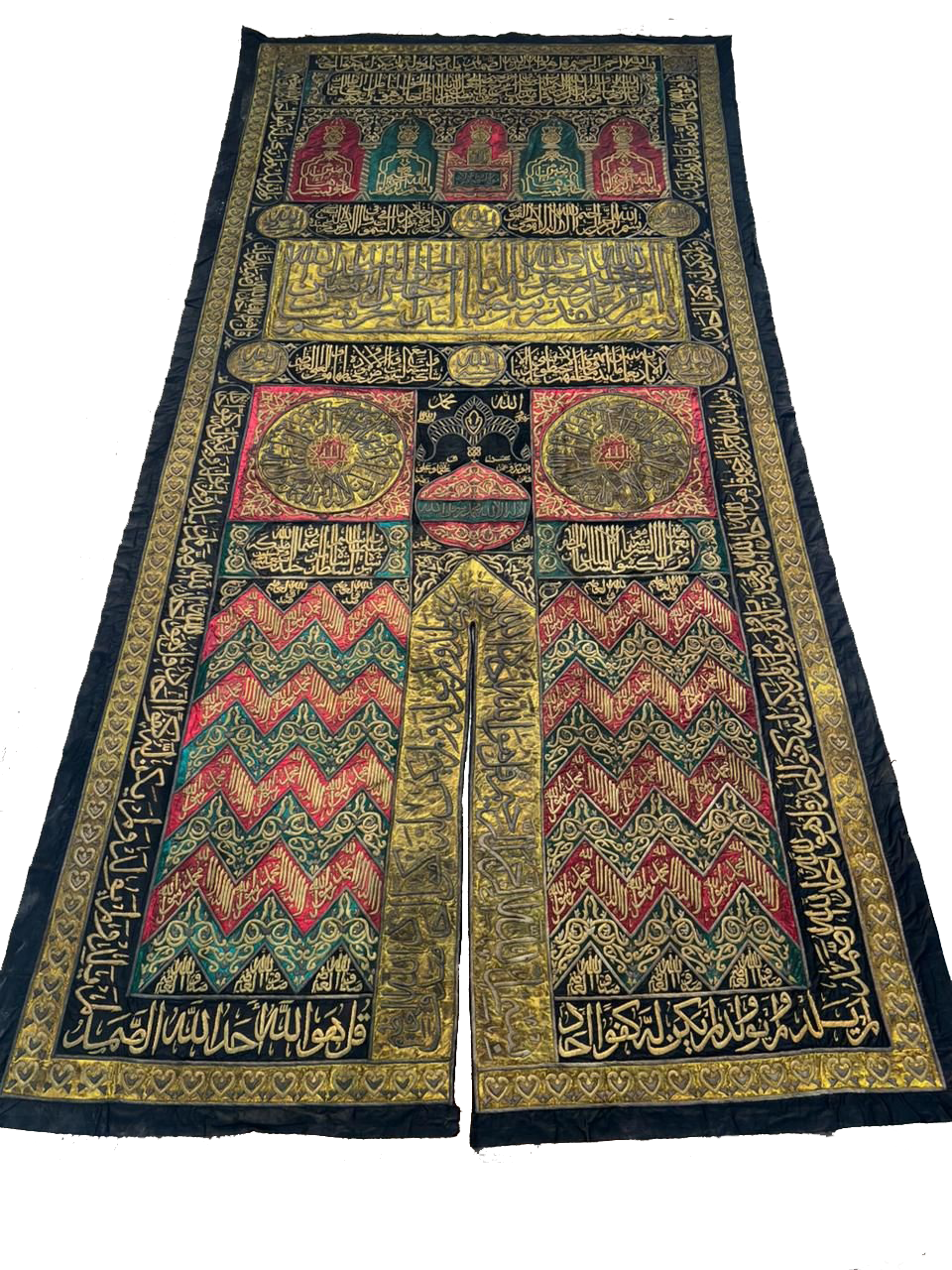
This is a noble curtain, an ancient covering, commissioned by the victorious Sultan Suleiman Shah, son of Sultan Selim Shah, son of Osman—may God perpetuate his reign—in the year 950 AH (1543–1544 CE). It adorned the door of the Holy Kaaba as though it were a mantle of awe, a robe of purity, or a wall of light clothing the House of God.
It was woven with threads that speak of sanctity, embroidered with Qur’anic verses that echo the breath of revelation and bear witness to the descent of the Book upon the heart of the noble Prophet. It was adorned with the Most Beautiful Names of God, each name like a pearl, each word like a lamp, each letter like a key to the unseen. Surrounding it are Ottoman decorations, flowing like waves and gleaming like stars, reminding the eye that beauty springs from majesty, and that artistry is itself a sign of divine power.
This curtain is unlike any other. It is among the earliest coverings made for the door of the Holy Kaaba, a guardian of centuries, a witness that when kings humble themselves before God, He elevates their remembrance and immortalizes their works. It hung upon the sacred door for ages, swaying with the winds as spirits sway in the presence of the Most Merciful. When touched by the hands of the supplicant, tears would flow and hearts would ascend toward the heavens.
What garment could equal it? What treasure could rival it? Its worth cannot be measured by gold or jewels, for it carries within its fabric the fragrance of history, within its adornments the sanctity of worship, within its verses the soul of the Qur’an, and within its Names the light of divine oneness. It is not a commodity for merchants, nor a trophy for princes, but a sacred veil woven by faith, commissioned by a Sultan, and set as a screen between earth and heaven.
It is a document that time cannot erase, a jewel that age cannot dim, an eternal emblem of the majesty of the Sacred House and the greatness of the sultans who were honored to serve it.
هذه ستارةٌ جليلة، وكسوةٌ عتيقة، أمر بصناعتها السلطان المظفّر سليمان شاه بن السلطان سليم شاه بن عثمان، خلد الله ملكه، في سنة تسعمائة وخمسين للهجرة. فجاءت كسوة باب الكعبة المشرفة كأنها وشاحُ الهيبة، أو رداءُ الطهارة، أو جدارٌ من نورٍ يكتسي به بيت الله الحرام.
نُسجت بخيوطٍ ناطقة بالقداسة، مطرّزةٍ بآياتٍ قرآنية، تتردّد فيها أنفاس الوحي، وتشهد بنزول الكتاب على قلب النبي الكريم. وزُيّنت بأسماء الله الحسنى، كأنّ كل اسمٍ منها لؤلؤة، وكل لفظةٍ منها مشكاة، وكل حرفٍ منها مفتاحٌ من مفاتيح الغيب. ثم أُحيطت بزخارفَ عثمانيّةٍ بهيّة، تموج كالأمواج، وتنتظم كالنجوم، تذكّر العين أن الجمال من آثار الجلال، وأن النقش من دلائل القدرة.
هي ستارةٌ ليست كسائر الستور، بل أثرٌ عظيم من أوائل ما صُنع لكسوة باب الكعبة المشرّفة، حافظةٌ سرّ القرون، وشاهدةٌ على أن الملوك إذا دانوا لله، رفع الله ذكرهم وخلّد آثارهم. بقيت على الباب الشريف دهورًا، تتماوج مع الرياح كما تتماوج الأرواح في حضرة الرحمن، فإذا لامستها الأكفّ بالدعاء، سالت دموعٌ صادقة، وتعلّقت القلوب بالسماء.
أيّ ثوبٍ يوازيها؟ وأيّ نفاسةٍ تضاهيها؟ قيمتها لا تُقاس بذهبٍ ولا جوهر، فإنها تحمل في نسيجها عبق التاريخ، وفي زخارفها قداسة العبادة، وفي آياتها روح الكتاب، وفي أسمائها نور التوحيد. هي قطعةٌ تأبى أن تكون سلعةً للتجار، أو غنيمةً للأمراء، لأنها كسوةٌ صيغت بيد الإيمان، وزُفّت بأمر السلطان، وجُعلت حجابًا بين الأرض والسماء.
فهي وثيقةٌ لا يطويها الزمان، وحليةٌ لا تبهت مع السنين، ورمزٌ خالدٌ لمهابة البيت الحرام، ولعظمة من تشرف بخدمته من السلاطين.